

Gratitude Matters
13th January, 2026
I’ve been thinking a lot about gratitude lately. I have been seeing people do some amazing things going above and beyond to make a difference… So this is for those unsung heroes as a way of saying… I see you!
Whether it’s:
- Business leaders dealing creatively with a challenging economic climate to ensure their clients are happy and (importantly) their teams get paid
- Beach cleaners dealing with a tide of plastic, supporting the circular economy to protect the planet
- Rescuers (of humans and wildlife) out in all conditions at all hours of the day
- Communities pulling together in light of the recent severe storms we have experienced in the South West… and more
Gratitude it seems has been watered down into politeness…. BUT real gratitude, the kind that actually changes how people think, feel, and behave, runs so much deeper than etiquette. It’s not about good manners, rather it’s about how we are wired to notice effort, value contribution, and decide whether it’s safe to keep giving of our energy.
Gratitude is part of our psychological infrastructure. When it’s present, ecosystems are healthy and in flow but when it’s missing, things quietly corrode.
My friend J (Wallace J Nicchols) used to say “undervalue anybody or anything and bad things happen”… it’s a lesson from the natural world… think about how we treat our water systems as an illustration of this.
Saying thank you is an action whereas gratitude is a way of showing up.. We can all say thank you without feeling grateful. For instance – a reflex thank you, a sign-off line or thumbs up on a text…. A tick in the box of being “nice”.
Genuine gratitude, though, has weight to it and it doesn’t have to be a public accolade. It involves “recognition”, the kind where we see not just the outcome, but the effort, the intention, the cost to the person who made it happen.
As leadership and blue health coaches we might describe this as getting beyond the wave.
Psychologists describe this difference clearly: gratitude requires noticing benefit, attributing it to someone’s intentional effort, and valuing that effort. It’s relational, not transactional.
When gratitude is real, people feel seen, but when it’s absent, even if the words are technically polite… people feel invisible. And invisibility is physically and emotionally exhausting.
Every workplace, team, or community runs on an unspoken agreement known as the psychological contract. It’s not written down and it doesn’t sit in HR policy… but everyone feels it.
It includes beliefs like…
- If I put effort in, the impact of my efforts will be noticed.
- If I go the extra mile, it will matter and be valued.
- If I contribute, I belong.
When this contract is honoured, people stay engaged, but when it’s broken, especially through lack of recognition, motivation drains away a long time before performance visibly drops.
Research shows that unrecognised effort can actually feel worse than overt criticism. Not because people need praise, after all this isn’t about ego (in mBIT terms we are talking more about the heart than the gut)… but because effort without acknowledgment creates a sense of imbalance. People do not stop caring suddenly, but when energy is flowing in one direction only the state of disequilibrium can cause enthusiasm to cool in the absence of genuine warmth.
When effort goes unseen, the nervous system reads it as risk, we ask… why keep giving energy if it disappears without trace?
Over time this leads to reduced discretionary effort, emotional withdrawal, a narrowing of creativity and initiative and at worst a quiet resentment.
People stop offering what “isn’t required”. Not because they’re lazy, but because their system has learned it’s not safe or worthwhile.
It is not all bad news though!
Gratitude, when genuine, reverses this. It restores balance. It tells the system: “your energy landed somewhere meaningful”.
And here is where things become interesting…
Gratitude trains attention, and attention changes everything. Gratitude doesn’t just benefit the person receiving it. It rewires the person practicing it.
Developing an “attitude of gratitude” literally trains your attention toward positive contribution. You start scanning for what’s working, where effort is being made, not in a naïve way, but in a grounded, realistic one.
And attention is powerful.
What you repeatedly notice becomes what your brain expects to find. This links to the RAS reticular activating system we explore within NLP (our filters). Leaders who actively look for contribution begin to see more of it, not because standards have dropped, but because awareness has widened.
This shift has a measurable impact on mood too. Gratitude practices are linked to increased dopamine and serotonin, which explains why people who regularly acknowledge others often report feeling lighter, steadier, and more optimistic themselves.
You feel brighter because your mind is no longer stuck patrolling for problems alone.
Leadership isn’t about catching people out, in fact “watching mainly for mistakes” will drain team spirit faster than almost anything else.
Of course errors and accountability matter. But when leadership attention is weighted heavily toward catching people out, people become cautious, defensive and small.
Gratitude flips this dynamic.
Leaders who actively look for “what’s being done well” create psychological safety. They signal that effort is valued, not just outcomes. This doesn’t reduce standards, it raises them because people are more willing to stretch when they know their attempts won’t vanish unnoticed. Looking for the good isn’t soft. It creates momentum, builds trust and keeps energy circulating.
Gratitude isn’t something you either “have” or don’t. It’s a practice of attention.
Telling people “I noticed the care you put into that… or… I saw how much time that took” truly matters. Ensuring they know their effort made a difference, even if the result isn’t perfect yet, is likely to encourage continued commitment. This kind of acknowledgment costs very little and returns a great deal. It’s not about forced positivity or hollow praise, when we learn to really look for what’s going right, we don’t just change others, we change ourselves… for the better.
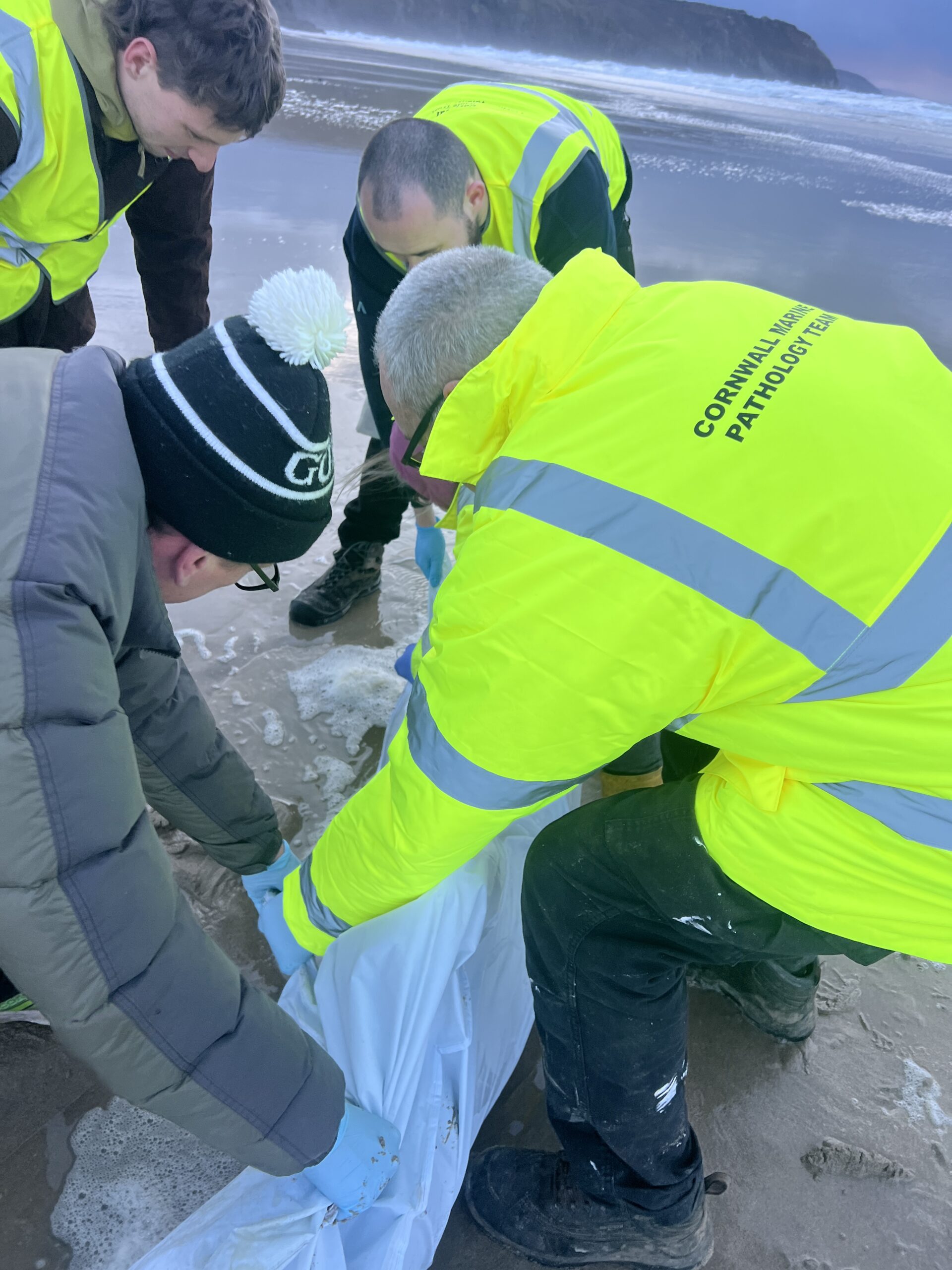
Image below shared with gratitude to Cornwall Marine Pathology Group volunteers recovering a deceased dolphin to post mortem… to gain insight about our ocean health.